Quick Answer: Deck repair in Sacramento makes sense when the damage is limited to boards, railings, or stairs and the posts, beams, joists, and ledger are still solid. Once rot reaches the framing in more than a few spots, a rebuild usually costs less over time than repairing the same deck every season.
Most calls we get for deck repair in Sacramento start with one soft board or a wobbly railing. Sometimes that really is a one-day fix. Other times the soft board is the only visible part of a problem that runs down into the joists and the ledger where the deck meets the house. The difference matters because a new surface on bad framing just hides the problem for a couple of seasons. This guide walks through what we look at under the boards, what drives the cost of each, when Sacramento permit rules come into play, and how to decide which one you are actually buying.
What is the real difference between deck repair and a deck rebuild?
Repair keeps the structure and replaces the parts that wear out. That means deck boards, stair treads, railing sections, fasteners, and sometimes a joist or two that can be sistered or swapped. The posts, beams, footings, and ledger stay.
A rebuild replaces the framing. On most rebuilds we tear the deck down to the footings, check whether the footings can be reused, and frame a new structure with new ledger flashing against the house. You can keep the same size and layout, or change it while the deck is apart anyway.
There is a middle option too. If the framing is sound but the surface is shot, we can resurface: new decking and railings over the existing joists. That only works when the joists are straight, dry, and spaced for the new boards.
What do we check before recommending repair or a rebuild?
We start underneath, not on top. Surface boards are the cheapest part of a deck and the least useful for judging it.
- The ledger board, where the deck bolts to the house. Missing or failed flashing here lets water sit against the rim of the house, and that is where rot spreads into the home itself.
- Joist ends and the tops of joists under board seams. Water collects in both places. We push a screwdriver into suspect spots; if it sinks in easily, the wood is soft.
- Posts at grade. A post buried in soil or sitting on a flat pad that holds water rots from the bottom up.
- Beam-to-post connections and joist hangers. Rusted or missing hardware is common on older decks built before modern connectors were standard.
- Stairs and railings. A railing that moves when you lean on it is a safety problem, not a cosmetic one.
- Footings. Cracked, undersized, or heaved footings change the answer quickly.
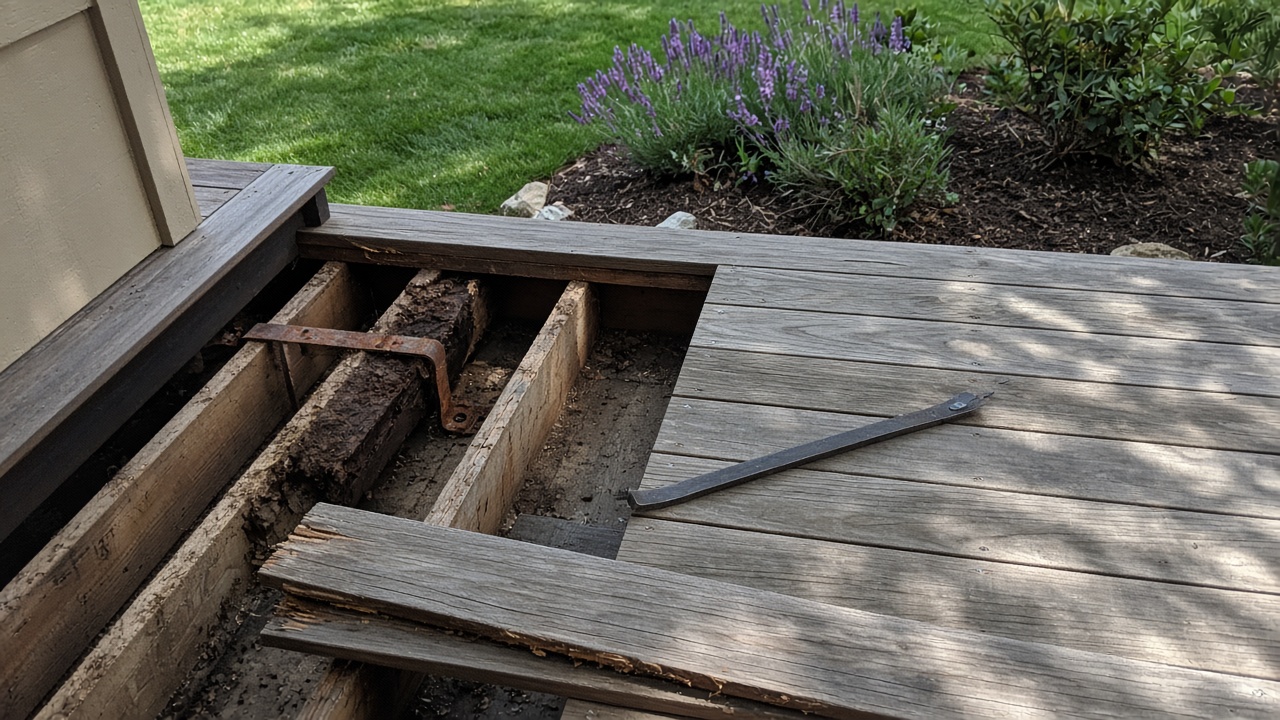
If two or three joists are soft and everything else is solid, that is a repair. If the ledger has rotted, several posts are soft at grade, or the joists are soft across most of the deck, we will tell you it is a rebuild.
What drives the cost of deck repair compared with a rebuild?
We skip the price list here, because two decks that look alike from the yard can need very different work. These are the things that move a deck quote up or down.
- How much hidden damage turns up once the boards come off.
- Deck height. A raised deck off a second-story slider needs more framing and safer access than a low platform.
- Whether the old footings can be reused or have to be dug out and poured again.
- Board material. Composite costs more up front than pressure-treated wood and skips the yearly staining.
- Backyard access for demo, haul-off, and material delivery.
- Permit and inspection time when the scope includes framing, footings, or a ledger.
We give you a written number after we look underneath, with any hidden-damage repair listed as its own line.
A repair usually looks like the cheaper choice at first. That changes when one repair turns into three repairs over three years. If we are replacing boards over joists that will need work soon anyway, you pay for labor twice.
When is repairing a Sacramento deck the smarter call?
Repair is usually right when:
- The damage is in the boards, stairs, or railings, and the framing passes a probe test.
- Soft spots are limited to a couple of joists that can be sistered or replaced.
- The ledger is flashed and dry.
- You like the size and layout and plan to keep the deck for years.
Sacramento summers are hard on deck surfaces. Boards check and split in the sun, and finishes fade in a season or two. A lot of that is surface wear, and surface wear is repairable. Winter rain is the bigger threat to framing, because water sits in joist tops and around posts for weeks at a time.
When does a full rebuild make more sense?
A rebuild is usually the better money when:
- The ledger or rim has rot, or there was never proper flashing between the deck and the house.
- Several posts are soft at grade or were set directly in soil.
- Joists are soft across large sections, not just one or two.
- Footings are cracked, undersized, or have moved.
- The railing height or stair layout does not meet current code and the deck would need major changes to fix it.
- You want a different size, shape, or material, like switching from wood to composite.
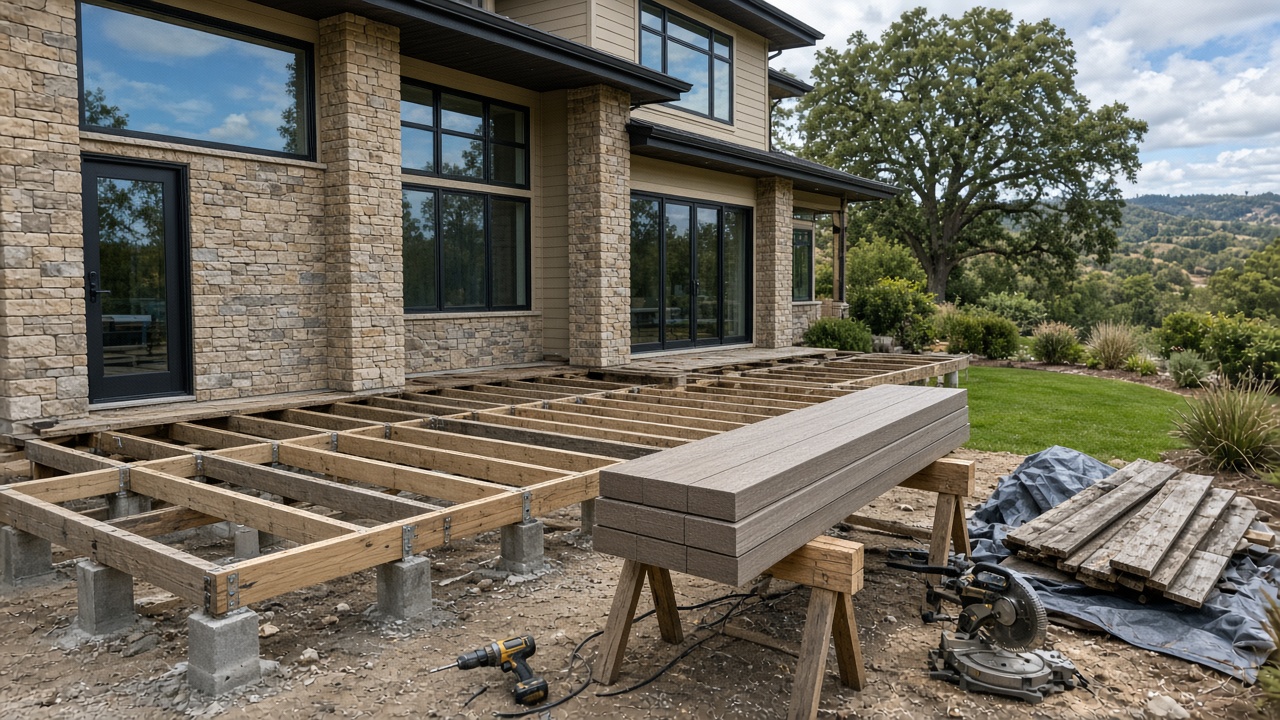
If you are rebuilding anyway, that is the time to change what bugged you about the old deck. Wider stairs, a different footprint, or composite boards that skip the yearly staining all cost less to add during a rebuild than later.
Do you need a permit to repair or rebuild a deck in Sacramento?
For a rebuild, usually yes. The City of Sacramento’s residential accessory structures handout (CDD-0417) says any structure attached to the house needs a building permit regardless of size. A detached deck is exempt only if it is 200 square feet or less, no more than 30 inches above grade at any point, and does not serve the required exit door. That exemption comes from Section R105.2 of the California Residential Code.
Straight board replacement on a sound frame is ordinary repair work. Replacing framing, footings, or a ledger is a different conversation, so we check the scope against the permit rules before we start.
Where your house sits matters too. Addresses inside Sacramento city limits go through the City of Sacramento Community Development Department. Homes in unincorporated areas like Carmichael, Arden-Arcade, and North Highlands go through Sacramento County instead. We cover the permit side in more detail in our guide to Sacramento home improvement permits.
Can dry rot in a deck spread to the house?
It can, and the ledger is how it gets there. When flashing fails, water runs behind the ledger and soaks the rim joist of the house. It is common to find deck boards that look fine on top while the house framing behind the ledger has gone soft.
If we find rot that has moved past the deck, we stop and show you before going further. That part of the job is structural repair on the house, and we handle it as its own scope. You can read more about how we approach it on our dry rot repair page.
How do you pick a contractor for deck repair?
- Check the contractor’s license on the CSLB website at cslb.ca.gov. Ours is CSLB #1138520.
- Ask what they will check under the boards before they quote.
- Ask whether the quote separates repair of hidden damage from the main scope.
- Ask who pulls the permit if one is needed.
- Get the scope in writing: which boards, which joists, which hardware.
A quote that only lists square footage of new boards without a word about framing is a quote that has not looked underneath.
Can you put new composite boards on an old deck frame?
Sometimes. Composite boards are heavier than most wood decking and many brands call for tighter joist spacing, often 16 inches on center or less, and even closer when boards run on a diagonal. A lot of older wood decks were framed at 24 inches. Check the manufacturer’s install guide for the boards you want before assuming the old frame will work.
The frame also has to be flat. Composite shows every high and low joist, so crowned or sagging joists need to be planed, shimmed, or replaced. And composite boards can outlast the pressure-treated framing under them by a wide margin. Putting a long-life surface on a tired frame means you may be tearing up good boards later to fix the joists.
Our rule is simple. If the frame is sound, straight, and spaced right, resurfacing with composite is a good deal. If any of those three is off, fix the frame first or plan a rebuild.
How long does deck repair take compared with a rebuild?
Board, stair, and railing repairs on a sound deck are often a day or two of work. Sistering or replacing a few joists adds time, mostly for pulling and relaying boards.
A rebuild takes longer. Demo and haul-off come first, then footing work if the old footings cannot be reused, then framing, decking, stairs, and railings. If the rebuild needs a permit, add the plan review and inspection schedule on top of the build days. We give you the full timeline at the estimate, including permit time, so you are not guessing.
What can you do this season to keep a deck from getting worse?
- Clear leaves and needles out of board gaps before the rains start. Packed debris holds water on top of the joists.
- Look at the ledger from underneath after the first big storm. Dark staining or drips on the house side mean the flashing is not doing its job.
- Pull soil and bark mulch back from the posts so they can dry out.
- Re-seal or re-stain wood decking when water stops beading on the surface.
- Tighten railing bolts and check stair stringers once a year.
None of that fixes rot that is already there. It does slow down the damage and buys time while you decide between repair and rebuild.
Bottom Line
If the framing is solid, repair it and keep the money. If the ledger, posts, or most of the joists are soft, rebuild once instead of paying for repairs every season. Homeowners who plan to stay put and like their deck layout usually land on repair or resurfacing. Anyone with rot at the ledger or a deck that never had proper flashing should plan on a rebuild.
We build, repair, and replace decks across the Sacramento area. If you want someone to look under the boards and give you a straight answer, see our Sacramento deck builder page or call or text (916) 200-6617 for a free estimate.
Sources
City of Sacramento Community Development Department, Residential Accessory Structures handout, CDD-0417.
California Residential Code, Section R105.2, Work exempt from permit.